A Blog by WORD – Women Organisation of Ri-Bhoi District
April 17, 2026
“Development has always been a kind of collective delusion.” — Gilbert Rist, as cited in Jacob Thomas, Environmental Management (Pearson, 2014), Chapter 1
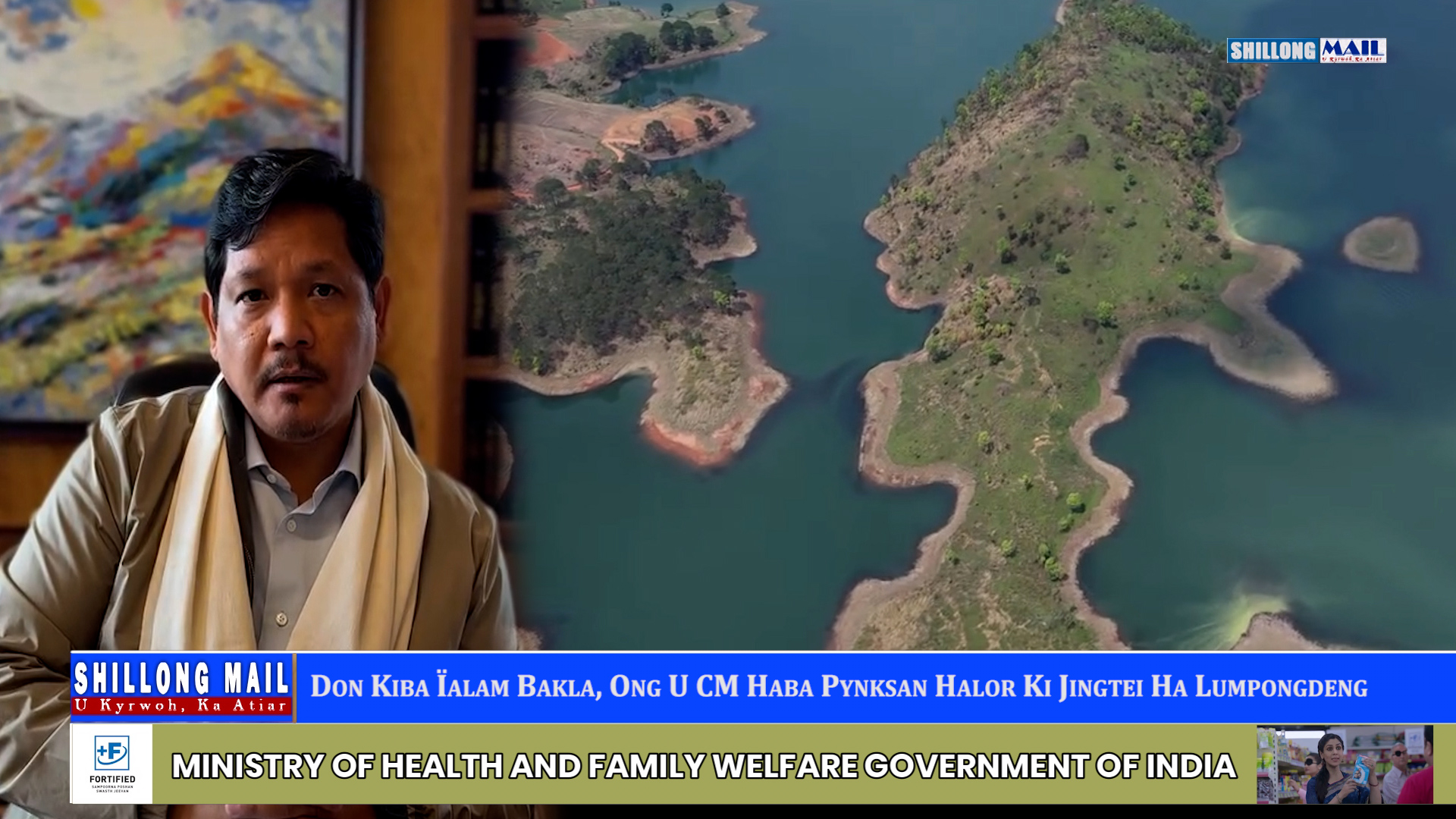
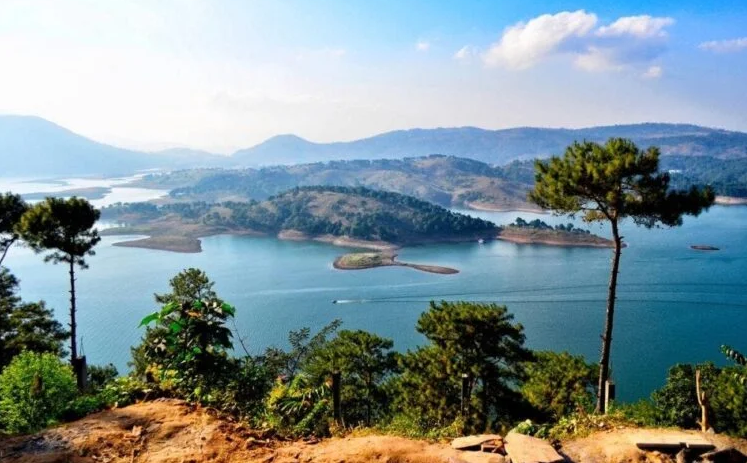
There is a small island in the middle of Umiam Lake a jewel of green sitting quietly on shimmering water just outside the hills of Shillong. Its name is Lumpongdeng. For centuries, it has been a refuge for migratory birds and rare indigenous species, a sacred piece of nature that locals call Nan Umiam the shared natural heritage of the people of Meghalaya.
Today, that island is under threat. And the people who love it are starving themselves to save it.
What Is Happening at Lumpongdeng?
In early April 2026, the Green Tech Foundation (GTF) launched an indefinite hunger strike outside the Shillong Secretariat to protest a proposed luxury tourism project on Lumpongdeng Island part of a larger 66-acre land deal linked to a high-end resort plan involving the Indian Hotels Company Limited (Tata Group), implemented through a special purpose vehicle called Umiam Hotels Private Limited.
GTF Chairman H. Bansiewdor Nonglang and members of the foundation began their hunger strike on April 8, 2026. Even after being detained by police accompanied by a magistrate, Nonglang vowed to continue his fast from custody until the government formally cancels the project. As of April 15, the hunger strike had entered its eighth day, with activists refusing to back down.
Chief Minister Conrad K. Sangma stepped in to clarify that no permanent construction would be permitted on the island only temporary, eco-friendly structures like shamianas and stalls for specific events. He described the GTF’s continued resistance as “unfortunate,”
saying, “Their concerns have already been addressed.”
But the activists remain unpersuaded, and they are right to be.
This Is Not Just About One Island
To understand why this protest matters, we must ask ourselves a deeper question: What is development — and for whom?
Jacob Thomas, in Chapter 1 of Environmental Management, writes that “development is an event constituting a new stage in a changing situation… improvement or a process of change to a desirable state.” But the word “desirable” carries the full weight of this
conflict. Desirable for whom? For the migratory birds that nest on Lumpongdeng? For the fisherfolk and local communities who have lived beside Umiam Lake for generations? Or for a luxury hospitality company seeking profit from a pristine landscape?
Thomas draws a sharp distinction between economic growth measured as a percentage increase in GDP and genuine inclusive development that must benefit all sections of society. A resort on a sacred island in a lake may boost tourism revenue figures. But it will never restore a felled tree, a displaced bird, or a community’s sense of ownership over a natural space they have long considered their own.
The Idukki hydroelectric dam case that Thomas presents in Chapter 1 is instructive here. The dam was hailed as a “symbol of development” for Kerala but it caused the inundation of 60 km² of pristine rainforest, impacted wildlife migration, altered the microclimate, and
triggered low-intensity earthquakes. What was called progress left scars that can never be healed. Lumpongdeng need not repeat that story.
Nature Is Not a Resource to Be Monetised
Chapter 2 of Thomas’s book, titled “Cultural and Ideological Construction of
Nature/Environment,” speaks directly to the heart of this struggle. Nature, Thomas explains, is not a commodity outside of human culture it is deeply embedded within it. For the Khasi people of Meghalaya, Umiam Lake and Lumpongdeng are not tourist amenities. They are living spaces of cultural memory, ecological knowledge, and spiritual meaning.
The book highlights the history of the nature-man relationship, where civilisations that lived in ecological harmony for millennia were disrupted by the ideology of industrial “progress.” The concept of ecological revolutions how societies radically transform their relationships with nature shows that such transformations are rarely neutral. They are driven by power, ideology, and economic interest.
When a government decides to lease a culturally sensitive island to a luxury hotel company without adequate public consultation, it is making an ideological choice that the market has more rights over nature than the people who live with it. The GTF is challenging that
ideology. And they are doing so with their bodies.
Why Lumpongdeng Is Irreplaceable: The Science of Sacred Spaces
Let us pause here and ask what exactly would we lose if Lumpongdeng falls? The answer is not abstract. It is documented. It is measurable. And it is damning. A Confirmed Key Biodiversity Area and Important Bird Area
Riat Khwan–Umiam Lake is officially designated as a Key Biodiversity Area (KBA) confirmed by the international KBA Programme, the world’s most comprehensive database on
biodiversity hotspots. It carries IBA (Important Bird Area) criteria A1 and A2, meaning it harbours globally threatened species and species with restricted range criteria established by BirdLife International, the global authority on avian conservation.
Meghalaya has only nine IBA sites across its entire territory. Riat Khwan–Umiam is one of them. Lumpongdeng Island sits at its very heart.
This is not a decorative designation. It is a scientific declaration that this ecosystem
is globally significant and irreplaceable. A luxury resort on Lumpongdeng is not just bad local governance it is a violation of international conservation commitments.
The Waterbirds That Call Lumpongdeng Home
The Asian Waterbird Census 2024, jointly conducted by the Meghalaya Forest &
Environment Department, Khasi Hills Wildlife Division, and the Meghalaya Biodiversity Board, recorded 155 waterbirds belonging to 13 different species in the wetland areas of Umiam Lake alone. That single census covering just one day in February represents a snapshot of a living, breathing congregation of birds that depend on this ecosystem year after year.
Waterfowl censuses from the 1990s recorded more than 40 species of waterbirds at Umiam. Among them: the Black Stork (Ciconia nigra) a species of European conservation concern and the Ferruginous Duck (Aythya nyroca), listed as Near Threatened on the IUCN Red List. Over 70 additional bird species have been recorded in the surrounding forest area.
Think about that. On that little island, in that clear lake, birds arrive from Central Asia, Siberia, and Europe guided by magnetic memory, by ancient instinct and they land at Lumpongdeng. They do not know about hotel contracts. They only know that this place is safe. Once it is not, they will not return. And neither will what made this place worth visiting in the first place.
The site lies within Biome-8: Sino-Himalayan Subtropical Forest, one of the world’s richest biodiversity corridors. BirdLife International has listed 95 biome-restricted bird species in this zone, of which at least 16 have already been confirmed at Riat Khwan–Umiam, with many more expected.
Umiam as an Essential Life Support Area (ELSA)
The UNDP’s Global Programme on Nature for Development defines Essential Life Support Areas (ELSAs) as places that must be protected, restored, and managed because they underpin the basic conditions for life providing clean water, regulating climate, supporting biodiversity, and sustaining communities.
Umiam Lake is precisely such an area. It is the primary water reservoir. It supports the Umiam–Umtru Hydroelectric Project, which generates power for the region. Its
catchment forests regulate water flow, prevent erosion, and stabilise the Khasi Hills’ fragile geology. The Riat Khwan Reserve Forest, which forms part of the broader KBA, contains a mix of Assam Subtropical Pine Forest and Broadleaf Forest habitat types that have evolved over millennia and cannot be reconstructed once fragmented.
Activists on the ground have echoed these scientific truths clearly. Meghalaya activists have explicitly warned that construction at Umiam would cause ecological damage to a landscape that is “a sanctuary for ecological biodiversity of species and habitat,” and that luxury construction “could only hamper” its ecological integrity.
Already Under Threat — And We Are Adding More
The KBA factsheet for Riat Khwan–Umiam does not mince words about the threats already bearing down on this site. It lists: encroachment, hunting and poaching, illegal felling, water pollution, and siltation from deforestation in the catchment area as ongoing threats. It explicitly recommends that the area be declared a bird sanctuary and calls for steps to check pollution from Shillong’s urban efluents.
That recommendation has never been acted upon. And now, instead of declaring it a sanctuary, the government is contemplating leasing it to a resort developer.
The broadleaf forest that birds prefer is already “slowly being reduced.” Every tree felled — and recall that trees were already allegedly cleared on the island before formal project approvals is another thread pulled from a web that took centuries to weave.
Jacob Thomas, in Chapter 2 of Environmental Management, writes that nature is not merely a backdrop to human civilization it is the very cultural and ideological foundation upon
which communities build their identities. When we permit the commercial colonisation of an IBA, a KBA, a wetland, a life-support area we are not just destroying habitat. We are destroying the ecological memory of a people. We are erasing a biome that tells the story of the Khasi Hills in a language older than any human tongue.
The Gap of Governance: Where Are the Safeguards?
Here lies perhaps the most troubling dimension of this entire episode the gap of governance.
Thomas identifies in Chapter 1 that “administrative incompetence” and poor governance lead directly to poor implementation of environmental law and standards. He argues that good governance must provide for “the preservation of the environment” as an indicator of sound development.
What has governance looked like in the Lumpongdeng case?
- Trees were allegedly felled on the island even before formal project approval. The Chief Minister attributed this to “individuals,” distancing the project company from the act yet no accountability has been established.
- Activists point to inconsistent messaging: officials appeared to downplay knowledge of the project in public, despite having addressed it formally in the Meghalaya State Assembly.
- No Environmental Impact Assessment (EIA) process appears to have been
completed or shared publicly for the island. No transparent land-use study was presented to citizens before the deal was signed.
- The protest itself only began because “repeated appeals failed to yield results” — meaning the GTF had raised concerns through formal channels before resorting to the hunger strike.
- The Chief Minister’s response to whether the government would invite protesters for talks was dismissive: “I don’t see any confusion in that.”
Thomas writes in Chapter 1 that the three big challenges of the modern world are inequality, instability, and unsustainability. All three are present in the Lumpongdeng situation. A commercial lease to a linked entity on a public natural heritage site is a question of inequality who gets access, and who gets excluded. The confrontational standoff, the hunger strike, the detentions these speak of instability born from governance failures. And commercialising a fragile island ecosystem is, by definition, unsustainable.
Meanwhile, Thomas also classifies lakes specifically as “stock resources” — natural resources that, once degraded, cannot be easily replenished. Umiam Lake, a reservoir that also serves the water and power needs of the region, is precisely such a resource.
Development activities on and around it are not simply aesthetic concerns. They are existential ones.
A Dangerous Precedent That Must Not Be Set
The GTF has consistently argued that even “controlled” or “temporary” development on Lumpongdeng could set a dangerous precedent. And this instinct is environmentally sound.
Once a road is built, it brings settlers. Once a shamiana becomes a permanent fixture, it
becomes a building. Once an exclusive resort occupies a lakeside, public access shrinks. We have seen this pattern play out across India’s most beautiful landscapes in Himachal
Pradesh, in Uttarakhand, in Goa and we cannot afford to let it unfold in Meghalaya.
Thomas, quoting Gil Stern in Chapter 1, captures this human contradiction with
precision: “Man is a complex being; he makes deserts bloom and lakes die.” Let us choose, for once, not to make this lake die.
The Philosophy of This Agitation
What the GTF is standing for literally standing, and now starving for is not a rejection of tourism or development. It is a demand for a different kind of development philosophy: one that recognises nature not as a raw material but as a co-inhabitant; one that places community consent above corporate convenience; one that measures success not in hotel occupancy rates but in the health of an ecosystem.
This philosophy resonates with Thomas’s Chapter 2 concept of sustainability that development must meet the needs of the present without compromising the ability of future generations to meet their own needs. Lumpongdeng today belongs not only to Meghalaya’s present generation. It belongs to every child who will grow up beside Umiam Lake, to every migratory bird that will seek its shores next winter, and to every person who believes that some things must simply be left alone.
The “Poverty in Paradises” section of Chapter 2 asks us to consider why regions endowed with the richest natural wealth often remain economically marginalised. The answer is not that nature is the obstacle the answer is that their nature is extracted and monetised by
others. Lumpongdeng must not become another paradise stripped for someone else’s profit.
The Call to Act — Stand with Lumpongdeng
Three members of the Green Tech Foundation are on hunger strike. Their bodies are the barricade between a luxury resort and one of Meghalaya’s most irreplaceable natural treasures. They are not asking the government to halt all progress. They are asking for
something far more reasonable: a written guarantee that Lumpongdeng Island will not be commercially developed.
If you are a citizen of Meghalaya, this is your lake. This is your island. Nan Umiam belongs to the people not to any hotel company.
If you are a citizen of India, you know what it feels like when a pristine forest, a river, a hill, or a coastal stretch disappears behind a barricade marked “private property.” You know the grief of that loss. Do not let Meghalaya grieve this one.
Here is what you can do — right now:
- Speak up — Share this post. Share the story. Break the silence.
- Amplify — Tag media, journalists, environmental organisations, and elected representatives with #SaveLumpongdeng and #SaveNanUmiam.
- Petition — Support and circulate community petitions demanding the government issue a formal written commitment to protect Lumpongdeng Island from all
commercial development.
The lake does not have a voice. The birds cannot file a petition. The trees cannot vote.
We must be their voice. We must be their vote.
A government that dismisses the hunger strike of its own citizens with the words “it’s unfortunate that they are not satisfied” has forgotten who it governs for. It is time to remind them.
Lumpongdeng must live. Nan Umiam must remain free.